


To boost your creativity, try self-hypnosis techniques like deep relaxation, visualization, and controlled breathing. Begin by clearing your mind in a quiet space, then use deep breathing to reach a calm state. Visualize your creative goals vividly, using symbolic imagery, and repeat affirmations tailored to your needs. Regular practice will enhance your ability to enter creative states, making innovative thinking more accessible. Explore further, and you'll discover even deeper layers of your creative potential.
Key Takeaways
- Utilize visualization techniques to enhance sensory experiences and expand creative thinking.
- Practice rhythmic breathing to maintain calm and facilitate deeper hypnosis.
- Apply personalized affirmations daily to strengthen creative neural pathways.
- Create and modify hypnotic scripts to target specific creative blocks and aspirations.
- Establish a regular self-hypnosis routine to consistently access and enhance creativity.
Understanding the Basics of Self-Hypnosis
Before diving into the practical applications of self-hypnosis, it's essential to grasp its foundational principles. At its core, self-hypnosis involves entering a state of deep relaxation where you can access your subconscious mind. This state paves the way for enhancing your creative mindset, vital in various fields from arts to problem-solving.
Understanding self-hypnosis fundamentals begins with recognizing its power to shift your mental processes. By focusing your mind and using specific visualization techniques, you can reveal new levels of creativity.
You're training your brain to approach challenges differently and tap into innovative solutions, effectively rewriting your cognitive patterns. As you explore self-hypnosis, remember, it's not just a tool, but a gateway to expanding your creative horizon.
Preparing Your Mind and Environment for Hypnosis

To effectively harness the potential of self-hypnosis for boosting creativity, it's imperative to properly prepare both your mind and your physical surroundings. Here's how you can set the stage:
1. Mindset Preparation: Begin by clearing your mind of distractions. Practice deep breathing or meditation to achieve a relaxed state.
This mental clarity will make you more receptive to hypnosis.
2. Environmental Setup: Choose a quiet, comfortable space where you won't be disturbed.
The environment should be soothing, with elements like soft lighting or gentle background music to enhance focus.
3. Consistent Schedule: Dedicate a specific time for your hypnosis practice.
Regular sessions help condition your mind to shift into a creative state more effortlessly each time you engage in self-hypnosis.
The Role of Visualization in Enhancing Creativity

Why does visualization play an essential role in enhancing creativity through self-hypnosis? Creative visualization leverages your mind's capacity to imagine and construct realities that don't yet exist but can be brought into being. As you practice visualization techniques, you're not just daydreaming; you're architecting possibilities that your creative mind can explore and expand upon.
| Technique | Benefit | Application |
|---|---|---|
| Mental Imagery | Enhances sensory experiences | Visual Arts, Writing |
| Symbolic Rehearsal | Prepares for creative execution | Performing Arts |
| Future Pacing | Sets goals and visual outcomes | Innovation, Design |
| Metaphoric Thinking | Broadens conceptual boundaries | Problem Solving |
| Mind Mapping | Organizes complex ideas visually | Research, Development |
Breathing Techniques to Induce Hypnosis
While creative visualization opens the door to enhanced creativity, mastering breathing techniques can deepen your state of hypnosis, making the imaginative process more accessible and effective.
Here's how you can integrate breath control and rhythmic breathing into your hypnosis routine:
- Begin with Deep Breaths: Start by taking slow, deep breaths. Inhale through your nose for a count of four, hold for seven, and exhale through your mouth for eight. This helps calm your mind and body, preparing you for deeper hypnosis.
- Establish Rhythmic Breathing: Once relaxed, shift to a rhythmic breathing pattern. Maintain a steady pace that feels natural but focused, enhancing your capacity to reach a hypnotic state.
- Focus on Consistency: Keep your breathing consistent. Regularity in breath control facilitates a smoother shift into hypnosis and maintains it, allowing your creativity to flourish under enhanced mental clarity.
Step-by-Step Guide to Self-Hypnosis for Creative Thinking
To enhance your creative abilities through self-hypnosis, you'll first need to pinpoint your focus area.
This targeted approach allows you to harness specific aspects of your creativity using tailored visualization and imagery techniques.
Selecting Your Focus Area
How do you choose the best focus area for your self-hypnosis session to enhance creativity? Identifying the right focus areas directly aligns your subconscious mind with your creative goals, making the process more effective.
Here's a concise guide to help you select your focus area:
- Assess Your Needs: Reflect on areas where you feel creatively blocked or where you need fresh ideas. Is it in writing, art, or problem-solving?
- Define Clear Goals: What specifically do you want to achieve? Set tangible, measurable creative goals to focus on during your session.
- Prioritize: Choose the focus area that feels most pressing or beneficial to your current projects or personal growth, ensuring your efforts are concentrated and impactful.
Visualization and Imagery Techniques
After selecting your focus area, you can enhance your creative journey through effective visualization and imagery techniques during self-hypnosis.
Begin by settling into a comfortable position and closing your eyes. Breathe deeply and focus your mind on a vivid image related to your creative goals. This practice, known as creative visualization, involves picturing yourself successfully engaging in creative activities, thereby enhancing your subconscious readiness to achieve these goals.
Next, employ imagery exercises by constructing detailed sensory experiences in your mind. Imagine the sights, sounds, and textures associated with your creative work.
The more detailed your imagery, the more deeply you'll embed these creative scenarios into your psyche, improving your ability to access innovative ideas and solutions in real-world situations.
Using Affirmations to Boost Creative Confidence

While you explore self-hypnosis to enhance your creativity, incorporating affirmations can greatly boost your creative confidence.
Affirmation techniques, combined with creative visualization, create a powerful synergy that strengthens your belief in your creative abilities. Here's how you can integrate these tools:
- Craft Personalized Affirmations: Start by writing affirmations that resonate deeply with your personal creative goals. Phrases like "I am a boundless source of creative ideas" can be particularly empowering.
- Daily Repetition: Repeat your affirmations daily. Consistency reinforces the neural pathways associated with your creative aspirations.
- Combine with Visualization: Envision yourself successfully executing creative tasks while reciting your affirmations. This dual approach embeds the positive beliefs deeper into your subconscious, enhancing your creative output.
Overcoming Mental Blocks With Hypnotic Suggestions
If you find yourself frequently hitting creative roadblocks, consider employing hypnotic suggestions as a strategic tool to overcome these mental barriers.
This technique, validated by cognitive science, can effectively clear your mind and enhance your creative flow. Hypnotic suggestions work by guiding you into a relaxed state where your subconscious is more accessible, allowing you to reshape negative thought patterns that hinder creativity.
To achieve mental clarity, focus your suggestions on positivity and open-mindedness. For example, affirmations like "My mind is clear and open to new and creative ideas" can greatly shift your perspective.
It's about reprogramming your thought process to bypass the blocks and tap into an uninterrupted stream of creativity.
Tailoring Hypnosis Sessions to Your Creative Needs
To effectively enhance your creativity through self-hypnosis, it's essential to first identify the specific barriers that hinder your creative process.
Once you've pinpointed these obstacles, you can select hypnotic scripts that are tailored to address and overcome them.
This personalized approach guarantees that each session directly supports your unique creative pursuits, maximizing the impact of your self-hypnosis practice.
Identifying Creative Obstacles
Before you can effectively use self-hypnosis to enhance your creativity, it's crucial to identify the specific barriers that are holding you back. Recognizing these obstacles allows you to tailor your hypnosis sessions to directly address and overcome them.
Here are three common creative barriers:
- Mental Limitations: These include self-doubt, fear of failure, and perfectionism which can stifle your creative expression.
- Stress and Anxiety: High levels of stress can cloud your thinking, making it difficult to access and nurture creative ideas.
- Fixed Mindset: Believing that creativity is an innate talent rather than a skill that can be developed prevents you from pursuing improvement through practice and persistence.
Understanding these barriers is your first step towards a more creative self through hypnosis.
Selecting Appropriate Hypnotic Scripts
Once you've identified the barriers to your creativity, selecting the right hypnotic scripts becomes essential for tailoring your self-hypnosis sessions to meet your specific needs.
Effective script selection isn't just about picking any script; it's about finding scripts that resonate deeply with your personal creative blocks and aspirations. This customization process involves modifying existing scripts or even creating unique ones that specifically address and dismantle your psychological barriers.
For instance, if fear of failure stifles your creativity, a script focusing on enhancing self-confidence and embracing mistakes as learning opportunities could be remarkably beneficial.
The Importance of Regular Practice in Self-Hypnosis
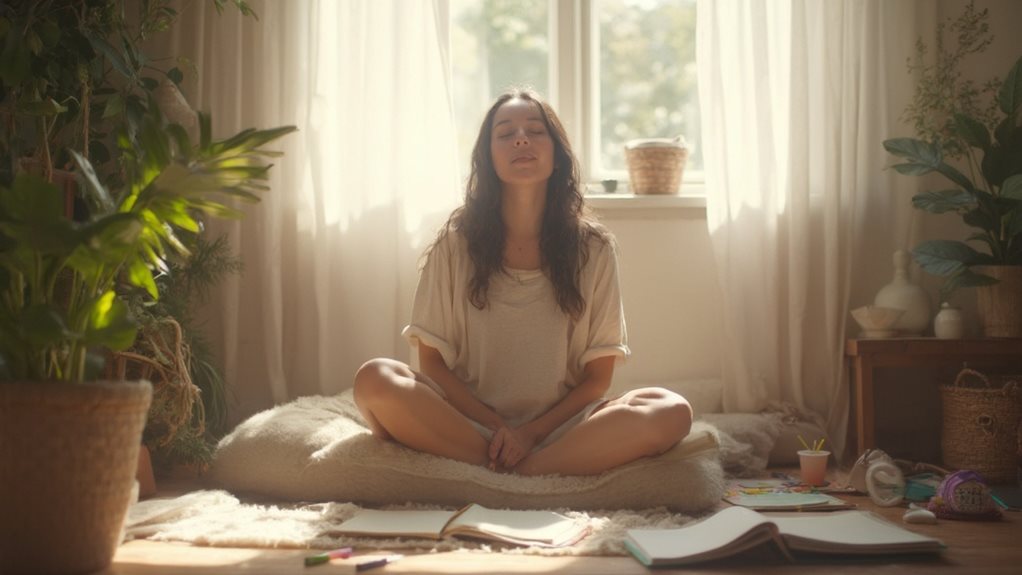
While self-hypnosis can be a powerful tool for enhancing creativity, its effectiveness markedly increases with regular practice.
Integrating self-hypnosis into your daily routine isn't just beneficial; it's essential for achieving significant results. You'll find that a regular commitment to this practice not only hones your hypnotic skills but also deepens the creative pathways in your brain.
Here are three key reasons why regular practice matters:
- Skill Improvement: Regular sessions help you refine your techniques and increase your ability to enter deeper states of mind.
- Consistency of Results: As with any skill, consistency leads to reliability. You'll notice more predictable and enhanced creative outputs.
- Psychological Preparedness: Frequent practice gets your mind used to entering a creative state on demand, reducing resistance over time.
Evaluating the Impact of Self-Hypnosis on Your Creativity
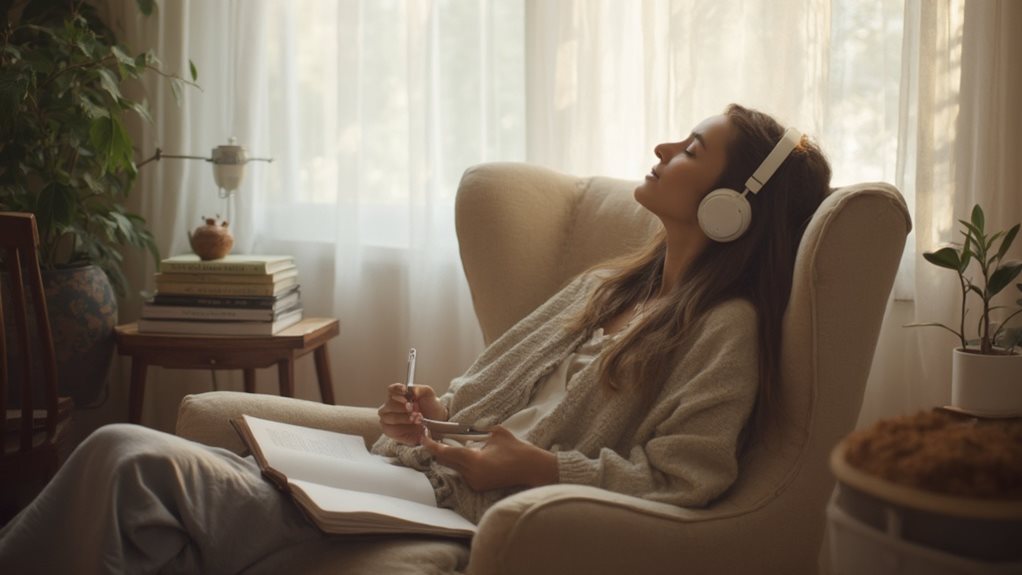
To effectively gauge the impact of self-hypnosis on your creativity, you'll need to establish clear, measurable criteria.
Begin by selecting tasks that reflect your creative outputs, such as problem-solving exercises, artistic projects, or idea generation sessions. Prior to implementing self-hypnosis techniques, record your performance on these tasks to serve as a baseline for later comparison.
Post-intervention, revisit these tasks to evaluate any enhancement in creativity. Utilize standardized creativity assessments to quantify improvements, ensuring your observations are objective and reliable.
The hypnosis benefits should manifest as increased originality, enhanced problem-solving abilities, or a quicker generation of innovative ideas. Analyzing these outcomes will help you understand how self-hypnosis can be a valuable tool in boosting your creative potential.
Frequently Asked Questions
Can Self-Hypnosis Techniques Help Children Enhance Their Creativity?
Yes, self-hypnosis can help enhance children's creativity by fostering relaxation and opening the mind to imaginative possibilities. Research shows these benefits can boost creative thinking, offering a valuable tool for children's developmental growth.
Are There Any Risks Associated With Self-Hypnosis?
You might've heard misconceptions about self-hypnosis; it's generally safe. However, potential side effects include disorientation or increased anxiety, particularly if not guided properly. It's essential to approach it with informed, professional guidance.
How Quickly Can I See Results From Self-Hypnosis?
You'll see improvements in creativity through self-hypnosis within a few weeks to months, depending on your consistency and technique. Remember, everyone's self-hypnosis timeline varies based on individual practice and psychological factors.
Can Self-Hypnosis Replace Traditional Therapy for Creativity Issues?
Self-hypnosis can't replace traditional therapy outright, but it's a valuable tool for enhancing creativity. The benefits include focused attention and improved mental clarity, potentially complementing therapy to address deeper psychological issues effectively.
Are There Any Apps or Tools to Assist With Self-Hypnosis for Creativity?
Yes, you'll find several apps and tools designed as lanterns to illuminate your creative pathways through self-hypnosis. These digital aids are research-backed, enhancing creativity by guiding your mind into deeply relaxed states.
Conclusion
Harnessing the power of self-hypnosis can exponentially elevate your creative prowess. By immersing yourself in regular, tailored sessions, you're not just tweaking your brain's gears; you're revolutionizing them. Imagine transforming mental blocks into stepping-stones and ordinary ideas into groundbreaking innovations. With diligent practice, the impact on your creativity isn't just noticeable—it's monumental. Embrace this transformative journey, and watch as your creative horizons expand beyond the conceivable limits.